01 — Define the audience
Write the ideal customer profile, geography, account exclusions, relevant functions, seniority range, and a defensible outreach purpose. A broad title search is not a campaign specification. Preserve unknowns when a profile or employer cannot be resolved.
Evidence: saved criteria and an exclusion sample. Limit: profile availability and freshness vary.
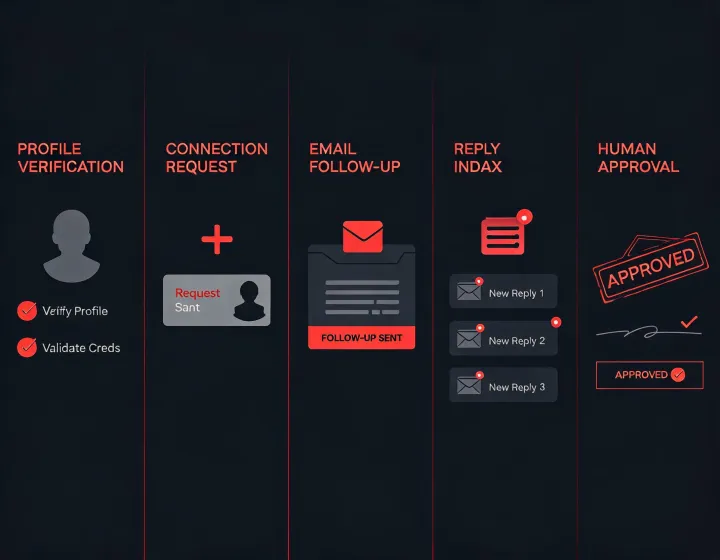
02 — Verify people and companies
Review identity, current employer, role responsibility, and source date before a person enters a sequence. Similar names, holding companies, agencies, and stale roles should enter an exception queue instead of being forced into a confident match.
Evidence: source URL, checked date, match rationale. Limit: a job title does not prove buying authority.
03 — Design channel logic
Specify connection, LinkedIn message, email, and manual steps with delays, branch rules, limits, and stop conditions. Document what happens after acceptance, reply, bounce, opt-out, or ambiguous sentiment. Do not let a follow-up cross a suppression boundary.
Evidence: sequence diagram and test cohort. Limit: connected channels have separate policies.
04 — Review messages
Use only verified, relevant facts. Separate the observation from the inference it supports, avoid sensitive personalization, and ensure a reviewer can reject or edit every proposed message. Variation should improve relevance, not disguise repeated volume.
Evidence: approved examples and rejection reasons. Limit: automation cannot guarantee replies or deliverability.
05 — Monitor and close
Measure acceptance, replies, opt-outs, bounces, review time, and correction work on a defined cohort. Pause when account health, complaint signals, or match quality move outside the team's threshold. Store deletion and revocation procedures beside the campaign record.
Evidence: dated run log. Limit: outcomes depend on audience, offer, account state, and execution.