LinkedIn outreach method note
Expandi Pricing 2026: What Revenue Ops Teams Should Scrutinize in an AI Prospecting Stack
· Julian Hartwell
-
Why We Started Looking at Expandi
-
The Expandi Pricing Plans in 2026: What's on the Page vs. What's in the Fine Print
-
Sales Intelligence Features: B2B Contact Data Is Only as Good as Its Verification
-
A Small-Budget Perspective (When You're Not a Giant Enterprise)
-
The Role of AI in the Stack: What's Actually Useful
-
What I Wish We'd Evaluated Sooner
-
Pricing Plans and the Bottom Line
-
Final Thoughts
In Q1 2026, I sat down with our VP of Revenue to review the sales stack. We'd been using a patchwork of tools for prospecting, and the monthly invoices were getting harder to justify. My job, as the person who tracks every dollar we spend on software, was to figure out whether we were actually getting value or just paying for a bundle of features that looked impressive on a comparison page.
I've managed our B2B SaaS procurement budget for about 6 years now, and I've learned that the subscription price is rarely the real story. Setup fees, per-seat charges, data credits, CRM sync add-ons, API overages—it all adds up. So when our team shortlisted Expandi for LinkedIn automation, lead generation, and data enrichment, I did what I always do: I built a cost model before we ever talked to sales.
Why We Started Looking at Expandi
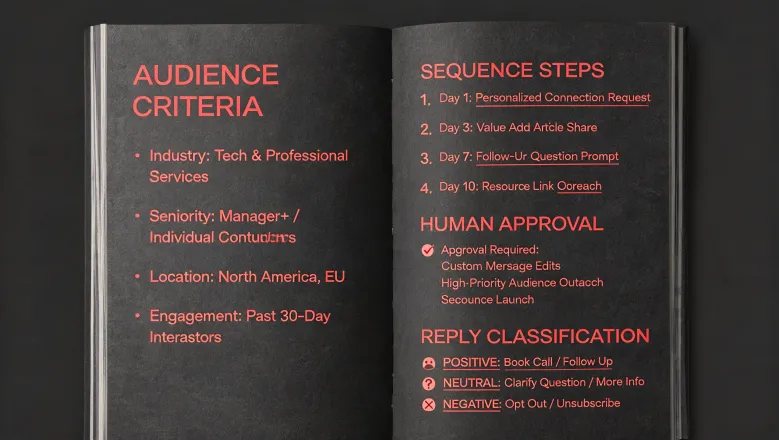
Our outbound team was already using LinkedIn automation, but we wanted a more integrated prospecting workflow. We didn't need just a connection request sender. We wanted something that could identify B2B contacts, verify emails, enrich records, and route them into our CRM without a lot of manual export/import work.
That's what drew us to Expandi. Their stack covers the full prospecting pipeline, not just one piece. In particular, the agent-native workflow stood out to me as something different. Most of the tools we evaluated required you to build campaigns manually. Expandi's approach felt more like setting a goal and letting the system work through it. Granted, I'm not the person who lives in the dashboard every day, but even from a procurement perspective, the difference matters. It meant less custom integration work and fewer hours of admin time for our SDRs.
The Expandi Pricing Plans in 2026: What's on the Page vs. What's in the Fine Print
Let's talk about Expandi pricing plans 2026, because this is where I have Opinions. (I'm a procurement manager. I always have opinions.)
I compared 8 vendors over 3 months before we shortlisted, and I've learned that most pricing pages tell you about the monthly subscription but leave out the operational costs. Expandi published their plans clearly, but a few points deserve scrutiny:
- LinkedIn seat allocation: We needed 6 seats initially. Some platforms charge per seat on top of a base plan. Expandi's structure was more straightforward.
- Data credits: Email finder and verification tools are often bundled as credits that renew monthly. If your SDR team is aggressive, credits go fast. I asked about overage costs before we signed.
- Integrations: Native integrations with HubSpot and Zapier are standard on most plans now, but we checked whether the full API access was restricted to higher tiers.
To be fair, Expandi's pricing was competitive. The real question wasn't the monthly price by itself—it was whether the capabilities would reduce our other expenses. If we could retire a standalone email finder, drop a lead enrichment add-on from our CRM, and cut time spent on manual list building, the effective total cost was better than the sticker price suggested. That's the total cost of ownership view, not just the headline number.
The Expandi LinkedIn automation dashboard deserves a mention here too. I've sat through a lot of software demos where the dashboard looks great in the walkthrough and then feels clunky in daily use. What I liked about Expandi's dashboard is that it shows campaign health, connection limits, and response data in the same view. It's not just a campaign launcher—it's a monitoring surface. For revenue ops, that's useful because it gives us visibility into what SDRs are actually doing, which matters when you're trying to optimize cost per meeting.
Sales Intelligence Features: B2B Contact Data Is Only as Good as Its Verification
Here's where the story takes a turn. My initial assumption was that as long as the tool could find B2B contacts in bulk, we'd be in good shape. But after auditing our previous vendor's data quality, I found that roughly 18% of the email addresses we'd uploaded over the previous year were either outdated or invalid. That was not a pleasant spreadsheet to look at. We had spent hours—and real money—on sequences going to dead addresses.
After that experience, I started asking a different question when evaluating sales intelligence features: How does the tool verify and maintain its data, not just how much data does it have?
When revenue operations teams evaluate data enrichment features, they should look at several things in my view:
- Verification at capture vs. verification at enrichment. Some tools verify emails only when you explicitly ask. Others continuously validate the data in their database before you ever see it. We preferred the latter.
- Data freshness signals. What indicates a record is current? Look for attributes like last-verified dates or intent signals. Expandi's intelligence layer includes intent data, which we didn't initially think we needed. In practice, it helped us prioritize contacts who were actively researching solutions.
- Integration with the outreach workflow. Data enrichment is pointless if your SDRs have to export records and manually upload them somewhere else. Expandi's agent-native workflow is worth evaluating here because the enrichment flows into the outreach sequence directly.
- Cost per valid lead. This is my favorite metric, but almost nobody puts it on their pricing page. When you compare tools, calculate the total monthly cost, then divide by the number of verified contacts generated. That number will tell you more than any feature comparison chart.
It took me 3 years and several vendor mistakes to understand this: data enrichment isn't about volume. A database with 200 million contacts is useless if your team can't filter, verify, and route them efficiently. What I look for now is whether the platform helps you act on the data, not just store it.
A Small-Budget Perspective (When You're Not a Giant Enterprise)
I want to be honest about something. Our company isn't a huge enterprise. We're a mid-sized B2B SaaS company with a modest but real budget for sales technology. I've seen too many tools that clearly cater to big accounts and treat smaller customers like an afterthought. What I appreciate about Expandi is that their plans are accessible to smaller teams. That matters more than people think. The vendors who treated my $200 order seriously when I was starting out are the ones I still use for $20,000 orders today.
That said, I get why some vendors enforce minimums on their data plans. Data infrastructure costs money. But the fact that Expandi doesn't force you into a huge commitment just to test the platform made it easier for us to justify a trial. Small doesn't mean unimportant—it means potential.
The Role of AI in the Stack: What's Actually Useful
I'll admit I was skeptical about the AI marketing jargon. Every vendor claims to be AI-powered now, and honestly, half of them are just wrapping standard database queries in a new interface. But there is something real about the agent-native approach.
Everything I'd read about sales automation said the value is in automating the repetitive tasks. In practice, the real value I found is in the decisions the system makes before you even get involved. Expandi's workflow can analyze a list of B2B contacts, score them, find the right communication channel, and enrich missing fields without a human touching each record. For our ops team, that doesn't replace SDRs—it removes the low-value busywork that drains time and energy.
Before we moved forward, I insisted on a security check, and this is worth mentioning for anyone else in a procurement role: ask about data handling policies. Configure to your comfort level, confirm that LinkedIn account safety is a priority in the platform's design, and remember that no automation tool can guarantee 100% compliance with LinkedIn's terms of service. Any vendor that promises absolute safety is overselling you.
What I Wish We'd Evaluated Sooner
Looking back, I should have prioritized the API and integration capabilities earlier in our evaluation. The automation features were impressive, but the systems we already relied on—HubSpot primarily—needed to be part of the workflow. We would have saved a few weeks of evaluation time if I had started there. But to be fair, Expandi's Zapier integration and API access made the connection relatively painless.
The Expandi LinkedIn automation dashboard also includes an inbox feature that wasn't in our original scope. I had assumed we'd need a separate tool for conversation management. Having it in the same dashboard simplified our workflow more than I expected. I don't usually get excited about interface consolidation, but there's a real cost to jumping between tabs.
Pricing Plans and the Bottom Line
For anyone evaluating Expandi pricing plans 2026, I'd say this: the monthly subscription is only one line in the budget. The other lines are where the true cost lives. We estimated that the effective value of having a full prospecting stack in one platform saved us roughly $1,200 per month in subscription costs we would have paid to three separate vendors. That's not a number I can verify independently for your situation, but it's worth modeling for your own stack.
Here's a simple framework I use when comparing any sales intelligence platform:
- List every tool in your current prospecting stack and its monthly cost.
- Identify overlaps and gaps. What are you double-paying for? What's missing that makes your SDRs do manual work?
- Pick the plan that covers the gaps, then run a 3-month pilot with one team. Measure cost per valid lead before and after.
If you can't measure the improvement, the fancy features aren't worth it.
Final Thoughts
I didn't expect to be the one writing a software review, but procurement has a way of making you an expert in things you never planned to learn. The sales intelligence space is crowded, and most platforms are decent. The question is which one is decent for your specific workflow.
For us, Expandi was the right fit because it aligned with our existing tools, didn't punish us for being a smaller team, and put enough data quality controls in place that I no longer have to worry about the email verification spreadsheet. That last one is worth more than it sounds.
If you're evaluating Expandi for your revenue operations team, dig into the dashboard during a trial, ask about data verification and refresh logic, and calculate the cost per verified lead. And remember: the best platform isn't the one with the most features. It's the one that makes your existing team more efficient without making your finance team cry.

Julian Hartwell
Julian Hartwell is an independent B2B sales intelligence analyst covering contact databases, company data, decision-maker profiles, direct dials, prospect lists, and buying signals. He applies the ISO/IEC 25012 data-quality model while examining field accuracy, coverage, freshness, duplicate rate, match confidence, and source transparency. His evidence-led guides help revenue teams compare prospecting platforms, define acceptable data thresholds, and build account lists that support reliable territory planning and outreach.