LinkedIn outreach method note
What Is Expandi? A Buyer's View on Prospecting Tools, Cold Email Platforms, and Data Enrichment
· Julian Hartwell
"Can you renew this, and also look into these two tools we want to try?"
That's how it started in January 2025. I manage purchasing for a 40-person B2B services company. When a sales tool subscription expires, it lands on my desk. When a team needs something new, it also lands on my desk. I report to both operations and finance, which means I have to answer two questions at once: does this actually work, and does the spend make sense?
Our sales team had been running LinkedIn outreach and cold email as separate operations. They wanted one platform that would bring it all together — find prospects, verify emails, enrich data, and send sequences. So I did what I always do: set up demos, check references, compare features. I've been managing vendor relationships since 2020, handling 60-80 orders a year across everything from software licenses to print materials. (I deal with Pantone color matching and 300 DPI proof checks in one corner of my job, and SaaS contracts in another. Quality standards matter everywhere, but they show up differently.) I'm very comfortable with a feature comparison. That's the part I know how to do.
The surface problem was obvious: too many tools, each claiming they'd solve prospecting. The deeper problem took me longer to see.
The deeper problem: tools don't fit how real prospecting works
Every demo looked impressive. Long feature checklists. Animated dashboards. But three issues kept surfacing across every vendor we evaluated. We looked at maybe eight tools. Maybe ten, I'd have to check my notes — demo fatigue blurs together after a while.
1. Feature lists ignore the actual workflow
A sales rep doesn't wake up thinking, "Today I'll use a data enrichment API." They think: "Who should I reach this week, and how do I start a conversation?" Tools that present themselves as a pile of features — instead of a sequence of steps that mirrors how prospecting really works — fail the test that matters. I watched our reps work around our old tool, not with it. They exported lists, cleaned them in Excel, logged interactions manually. The tool wasn't helping; it was just storing our work.
2. Data quality is the silent killer
I don't have hard data on industry-wide accuracy rates for email finders. What I can say from trialing several tools in late 2024: 10-20% of the emails we tested came back wrong or stale. That doesn't sound catastrophic until you're sending a few hundred emails per week and realizing a chunk are bouncing or landing with people who left the company months ago. When I raised this with one vendor, they told me our list hygiene was the problem. Maybe it was. But the tool was supposed to solve list hygiene, not require it.
3. "Integration" often means you do the work
Several vendors claimed they had HubSpot integration. In practice, that meant exported CSVs, column mapping, and manual uploads. For one tool, it meant a data pipeline so fragile that a single schema change in HubSpot broke it completely.
I wish I had measured the manual cleanup time more carefully over the years. What I can say anecdotally: our old prospecting workflow cost roughly two hours per rep per week in manual data handling. With six outbound reps, that's 12 hours a week — two full work days. Every week. Not spent selling.
What a bad prospecting stack actually costs
When I took over purchasing in 2020, the company had three overlapping lead generation subscriptions. One had gone unused for 14 months. During our 2024 vendor consolidation project, we found about $18,000 a year going to tools that duplicated each other.
I've made my own purchasing mistakes. In 2021, I chose a vendor because they were $3,000 cheaper than our regular supplier. They couldn't provide proper invoicing — a handwritten receipt, no tax ID. Finance rejected the expense report. I absorbed the cost from the department budget. Now I verify invoicing capability before placing any order, and I bring the same instinct to software contracts.
The costs of a bad prospecting stack are harder to see than a rejected invoice, but they're real:
- Deliverability damage. A cold email platform that doesn't manage domain reputation — warm-up, sending limits, bounce handling — is a liability. One bad campaign can ruin your domain's sender reputation for months, and that affects every email your team sends, not just the campaigns inside the tool.
- Data decay. Company data goes stale fast. Decision makers switch jobs. Companies get acquired. I remember enriching a list in January and finding it maybe 80-85% accurate by April.
- Shadow tools. When a tool doesn't fit, people improvise. One of our reps built a scraper on the side. Another bought a list from someone at a conference (ugh). Both bypassed compliance and security review.
Looking back, I should have examined the data pipeline during the demos before signing. At the time, the feature checklists seemed more objective. They weren't. A checklist tells you what a tool can do. It doesn't tell you whether it does it well enough to matter in real work.
Cold email platform features: when should a B2B sales team use one?
A cold email platform is worth the money when:
- You have a defined ideal customer profile and need to find actual contacts at target accounts — this is where the email finder, verification, and data enrichment features matter.
- You're doing outbound at a scale where manual personalization stops being physically possible. In our case, that was more than 15 personalized emails per rep per day.
- You want LinkedIn and email sequences running in one place, with replies tracked consistently.
- You need domain infrastructure — warm-up, sending limits, bounce management — that Outlook or Gmail doesn't offer.
It's not worth the money when the strategy is unclear. A cold email platform won't fix a weak value proposition. It's a scale instrument, not a strategy generator. I've renewed a lot of subscriptions over the years, and the ones nobody can explain the purpose of are the ones I flag first.
What expandi is — and what it's not
People ask me what is expandi tool, and I typically tell them this: as of March 2025, it's the closest thing I've found to a full prospecting stack in one place. Verify current features and pricing before you commit, because this market moves fast — I learned that in 2023 when a tool we renewed had silently repriced everything.
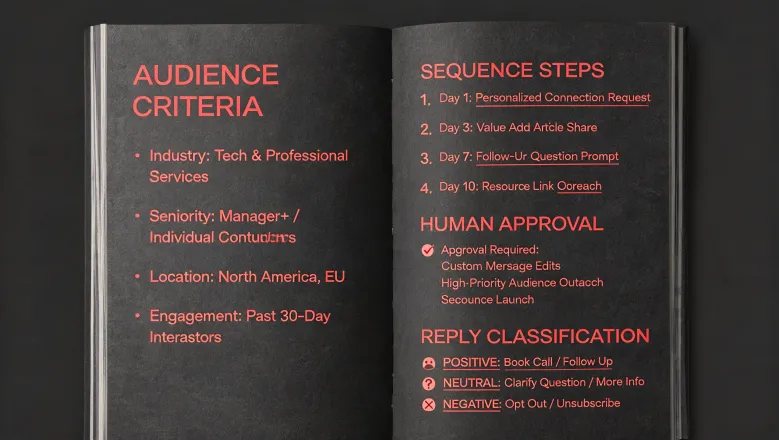
What expandi is: a platform built around what they call agent-native workflows. Instead of separate modules you glue together, the platform handles the whole sequence — find prospects on LinkedIn, verify emails, enrich company data, trigger outreach. The data enrichment API is genuinely useful: our other systems call it directly, so we can enrich data inside HubSpot without a middleman. That was a specific requirement I'd written down as "expandi hubspot integration," because I was tired of CSV exports pretending to be an integration. The actual HubSpot integration is a real two-way sync. We tested it within the first week. Our sales ops person sent me a Slack message saying "ok this actually works." Coming from him, that's practically a love letter.
What expandi isn't: it's not a CRM, and it doesn't pretend to be one. It's also not a magic lead generation button. The platform streamlines prospecting, but your team still does the targeting and messaging.
That honesty is the reason I trusted them. During the evaluation, expandi was the one vendor that regularly said "we don't do that." When a feature was outside their focus, they pointed us to a better option. It was irritating at first — I wanted checklist answers, not questions about our workflow. But it made me realize something. The vendor who says "this isn't our strength, here's who does it better" earns my trust for everything else. I'd rather work with a specialist who knows their limits than a generalist who overpromises.
The bottom line
The goal was never the best tool on paper. It was the fewest tools that cover the full workflow, with clean data, and a vendor that understands what they don't do.
We went from three overlapping subscriptions to one. From manual CSV transfers to a HubSpot sync that runs by itself. From "which tool did we even use for this?" to a single answer.
I wasn't looking for the perfect tool when we started this review. I was looking for one that actually does what it claims. There's something satisfying about a tool purchase that doesn't generate complaints — after years of vendors underdelivering, expandi has been one less thing on my plate. (finally!)

Julian Hartwell
Julian Hartwell is an independent B2B sales intelligence analyst covering contact databases, company data, decision-maker profiles, direct dials, prospect lists, and buying signals. He applies the ISO/IEC 25012 data-quality model while examining field accuracy, coverage, freshness, duplicate rate, match confidence, and source transparency. His evidence-led guides help revenue teams compare prospecting platforms, define acceptable data thresholds, and build account lists that support reliable territory planning and outreach.