LinkedIn outreach method note
What I Learned Buying Okki Go and Smartlead for a 65-Person B2B Sales Team
· Camille Ortega
-
The trigger: a bad personalization detail that reached a client
-
What we tested, and the cheap mistake
-
Okki Go account research vs Smartlead
-
The Sales Navigator scraper question
-
Compliance and benchmarks I actually used
-
The result: better brand, fewer stupid mistakes
-
What I would tell another admin buyer
In January 2024, I sat in a tiny conference room between operations and finance while our sales director said something I still remember: 'Our reply rates are dying, and I think it is the list.' I am the office administrator for a 65-person B2B services company. I manage all software and vendor ordering—roughly $280,000 annually across 14 vendors. I report to both operations and finance. When I took over purchasing in 2020, I thought vendor management was about invoices and renewal dates. After five years, I know it is about protecting the company from its own shortcuts. So when the sales team wanted a new stack of AI prospecting tools, the request landed on my desk.
We already had Smartlead for sending and sequencing. It did what it promised: inbox rotation, warm-up, sequences. But the team was doing account research in a messy mix of spreadsheets, LinkedIn tabs, and a Chrome extension someone bought with a personal card. That is when I started searching for okki-go, okki go account research, and company enrichment sales intelligence. I had no idea what a sales navigator scraper was. I learned fast.
The trigger: a bad personalization detail that reached a client
In March 2024, one of our SDRs sent a first-touch email to a VP at a strategic account. The email opened with 'Hi [First Name]'—except it was not a merge field. It was a wrong first name pulled from an old database. The VP forwarded it to our account lead with one line: 'Do you know who this is?' That was the trigger event that changed how I think about data quality. I did not fully understand company enrichment sales intelligence until a $0.02 data error made a $75,000 renewal conversation awkward.
Before that, I thought enrichment was a nice-to-have. After that, I treated it like invoicing: if the data is not right, finance and clients both feel it.
What we tested, and the cheap mistake
First, we tried the cheap route. We found a sales navigator scraper for about $99/month—or rather, closer to $130 once we added seats. It promised to pull Sales Navigator contacts into CSV. Saved about $300/month compared with the next tool on our list. Ended up spending way more in SDR time and cleanup. Out of 300 contacts, 47 had invalid or risky emails. Two people complained. One called us 'spammy.' Net loss in credibility: hard to quantify, but real.
That was my penny-wise, pound-foolish moment. The 'budget vendor' choice looked smart until we saw the quality. We were not just buying data. We were buying the first impression our brand made in someone's inbox.
We also had a process gap. We did not have a formal vendor approval process for new sales tools. Cost us when that scraper bypassed security review and started syncing fields into HubSpot that did not match our naming rules. The third time we found duplicate accounts (ugh), I finally created a one-page checklist. Should have done it after the first time.
Okki Go account research vs Smartlead
By Q2 2024, I had quotes from Okki Go—sometimes written as okki-go or okkigo—and a renewal from Smartlead. The sales team asked for a simple answer: okki go vs smartlead. That framing was wrong.
Smartlead is a sending machine. It handled sequences, inbox rotation, and deliverability basics. It did not do account research, intent signals, or waterfall enrichment. Okki Go was different. The pitch was agent-native prospecting: account research, company enrichment sales intelligence, intent data, and human-in-the-loop outreach. It was not trying to replace our SDRs. It was trying to remove the manual research steps that were eating their mornings.
We kept Smartlead for sending. We used Okki Go for okki go account research—building account briefs, finding signals like hiring, tech changes, funding, and then passing a reviewed draft to the SDR. The human still hit send. That mattered to me because finance and legal both hate black-box automation.
If you are evaluating okki go vs smartlead, do not ask which one wins. Ask which part of the workflow is broken. Sending and research are different jobs.
The Sales Navigator scraper question
Our SDR manager kept asking the exact question: what is sales navigator scraper and when should a b2b sales team use it? Here is the answer I gave after talking to legal and reading LinkedIn's User Agreement (linkedin.com/legal/user-agreement). A Sales Navigator scraper is a tool that automates pulling profile, company, and relationship data from Sales Navigator into a CRM, CSV, or enrichment workflow. LinkedIn's User Agreement prohibits scraping unless you have permission. So the safe use case is narrow: internal research on accounts you already have a lawful basis to contact, with human review, and without automating connection requests or InMails.
We used it—cautiously—for account mapping. We did not use it to blast 5,000 contacts. That is where teams get burned.
Compliance and benchmarks I actually used
According to the FTC (ftc.gov), CAN-SPAM requires commercial email to include accurate header information, a clear opt-out, and prompt honoring of opt-out requests—within 10 business days. For EU contacts, GDPR still requires a lawful basis and an easy way to object. I am not a lawyer, so we had ours review the workflow. That is not glamorous, but it kept us out of trouble.
We also watched spam complaint rates. Google's Email Sender Guidelines (support.google.com) say bulk senders should keep spam complaint rates below 0.3%. Yahoo's sender best practices are similar. If your list quality is bad, you will not just hurt reply rates—you will hurt deliverability for every future campaign.
On cold email reply rate benchmark numbers: be skeptical. Vendor blogs throw around 1%, 5%, 10%. Those are not audited. I used cold email reply rate benchmark data as a directional check, not a target. Our own segments ranged from 0.9% to 3.4% depending on list, offer, and follow-up. The improvement came from cleaner data and better account research, not from a magic template.
The result: better brand, fewer stupid mistakes
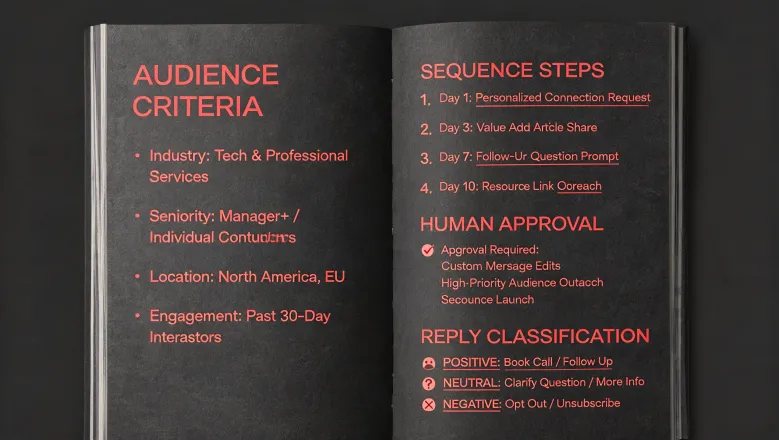
By Q4 2024, our process looked like this:
- Build account lists in Okki Go using waterfall enrichment and intent signals.
- Verify emails before loading into Smartlead.
- Use Sales Navigator scraping only for internal mapping, with legal sign-off.
- Require SDR review before any AI-assisted draft goes out.
- Track bounce rate, spam complaints, and reply quality—not just volume.
We did not get a 20% reply rate. Anyone promising that is selling something. But the SDRs stopped wasting mornings on manual research. The emails sounded like they were written by someone who knew the account. And we stopped sending 'Hi [First Name]' to strategic clients.
My finance director asked if the stack paid for itself. I gave her the honest answer: it reduced wasted SDR hours, lowered bounce rates, and protected a few key relationships. The ROI was not a spreadsheet cell. It was fewer fires.
What I would tell another admin buyer
Quality is brand. That is the lesson. When you buy sales intelligence, you are not buying rows. You are buying the first impression your company makes. The $50 or $500 difference per month is irrelevant if the output makes you look careless.
If you are comparing okki go vs smartlead, do not force a winner. Smartlead can be your sending layer. Okki Go can be your research and enrichment layer. If you need to know what a Sales Navigator scraper is, start with the legal limits before you start with the export button. And if a vendor promises a fixed reply-rate outcome or perfect email accuracy, walk away. No one can promise that.
I still keep a handwritten note in my vendor binder: 'Cheap data is expensive.' It has been true since 2020, and it was true in our 2024 vendor consolidation project. I just wish I had learned it before that VP forwarded our email.

Camille Ortega
Camille Ortega is an independent buyer-intent and visitor intelligence analyst covering intent data, sales triggers, website visitor identification, account matching, anonymous traffic, and go-to-market signals. She examines EU GDPR requirements alongside match confidence, false-positive rate, signal recency, account coverage, baseline conversion, lift, consent status, and activation latency. Her research helps marketing and sales teams judge whether signals improve prioritization, define responsible activation rules, and avoid treating weak identification probabilities as confirmed buyer interest.