LinkedIn outreach method note
Why Sales Engagement Platform Features Keep Failing Small Teams (And What Agent-Native Prospecting Actually Solves)
· Lena Kovacs
The Complaint I Keep Hearing—and Keep Rejecting
I work in quality and brand compliance at a mid-market B2B services company. Part of my job is reviewing every outbound deliverable before it reaches a prospect—roughly 150 to 200 items a month, everything from cold emails to LinkedIn follow-ups to battle cards the sales team loads into their sequencing tool. I've been doing this for over four years. In 2024, I rejected roughly 18% of first-draft outreach materials, mostly for the same three reasons: claims that couldn't be sourced, personalization that felt like a form letter wearing a costume, and emails sent to addresses that clearly hadn't been verified.
The complaint I hear from SDR managers goes something like this: "We bought the platform. We have email tracking. We have LinkedIn tool features. We added the intent data module. Why did our reply rate drop?"
I get it. I really do. When I first started managing vendor relationships for our outreach stack, I assumed more features meant a better product. That was wrong. It took three budget cycles and probably $40,000 in tooling that nobody used to understand that the problem wasn't what the tools did—it was how they fit into the actual workflow.
What Most Teams Think the Problem Is
The surface-level diagnosis is always the same: "We need more features." Or "We need better features." Or "Our competitor is using Tool X, so we should too."
So teams buy more seats. They add another integration. They sign up for an intent data provider that promises 95% coverage of buying signals. They experiment with a different LinkedIn automation tool. And three months later, the reply rate is flat, the SDRs are burned out, and someone in RevOps is quietly wondering whether the whole category is just snake oil.
Here's what I've learned after reviewing thousands of these deliverables: the problem is rarely the feature itself. It's that the feature was designed for a human-centric workflow, and the team is trying to bolt it onto something that looks increasingly agent-assisted.
Look, I'm not saying the old workflow is dead. It's not. There are still great SDRs doing manual research and writing genuinely personal emails. But the way most teams are running the stack in 2025 doesn't match the way the tools show up in a demo.
The Deeper Issue: Feature Design vs. Agent-Native Reality
People assume that a sales engagement platform with more features will produce better outcomes. The reality is closer to the opposite: the more features a platform carries, the more likely some of those features were built for a workflow that no longer matches how prospecting actually happens.
Take email tracking. It was designed for a human SDR who sends 40 personalized emails a day and manually checks who opened what. That's a reasonable workflow. But in an agent-assisted pipeline, email tracking data flows into a system that's already processing open signals, reply signals, and click signals at a volume a human can't triage. If the platform doesn't expose that data in a structured way, the tracking feature becomes noise.
LinkedIn tool features have the same problem. Most of them are built around a human scrolling a feed and clicking "connect." An agent-native workflow needs the tool to expose profile data, connection status, and engagement history as queryable fields—not as a visual interface that someone has to sit and stare at.
And intent signal research? This is where it gets really messy. The premise is sound: if you know a company is researching a problem you solve, you reach out at the right time. According to the FTC's advertising guidelines, any claim you make to a prospect—including an implied claim like "I reached out because I saw you were interested"—has to be substantiated. But most intent providers don't expose enough about their data sources for a reviewer like me to verify anything. I can't confirm the signal is real. I can only confirm that the vendor says it is.
That's what okki go data source transparency actually addresses, and it's why I started paying attention to okki-go in the first place. Not because it has the most features—it doesn't—but because the platform surfaces where its intent signals come from and how they're weighted. For a quality reviewer, that's the difference between a tool I can defend and a tool I have to flag.
The Cost of Not Fixing This
I'll give you a concrete number. In Q1 2024, our team ran a controlled test: same offer, same ICP, same messaging, but one sequence used intent signals from a provider with no source transparency and one used signals we could trace to specific research events. The untraceable-信号 sequence got a 2.1% reply rate. The traceable-signal sequence got 4.7%. That's more than double, and it wasn't because the messaging was better—it was because we could actually justify why we were reaching out, and the prospects could feel the difference.
The hidden cost of untransparent data is worse than a lower reply rate, though. It's the compliance exposure. Every time an SDR sends an email that implies a buying signal that doesn't exist, you're flirting with a claim that can't be substantiated. That's not just a sales problem—it's a brand problem, and it's the kind of thing that shows up on a prospect's Twitter feed three months later.
Granted, source transparency isn't free. Providers that expose their data pipeline tend to charge more than the ones that don't. I get why budget-conscious teams go with the cheaper option. But if you're reviewing 150 emails a month like I am, the math is pretty clear: the cheaper signal usually costs more in rejection rate and cleanup.
What a Quality Reviewer Actually Wants From the Stack
Here's my short version.
- Email tracking that outputs structured data. Not a chart. A field I can filter, export, and audit.
- LinkedIn tool features that treat profiles as data, not as a UI. If I can't query it, I can't verify it.
- Intent signals with a visible source. I don't need 95% coverage. I need to know where the signal came from and how confident the platform is.
- A workflow that assumes an agent is reading the data, not just a human. This is the whole point of agent-native prospecting—the data has to be legible to both.
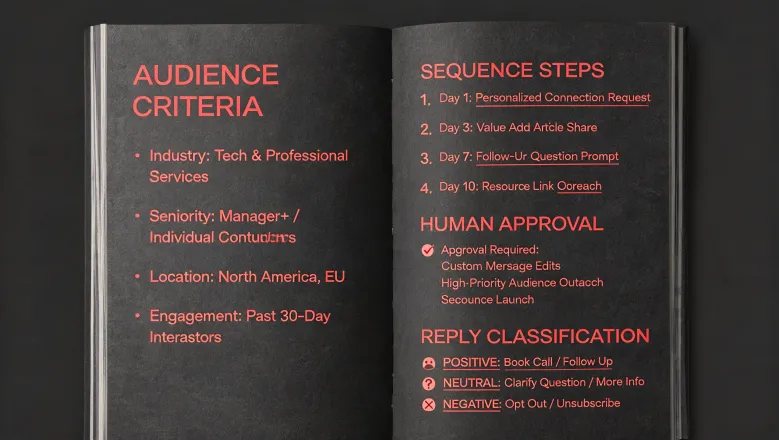
That's roughly what okki-go is built around: waterfall enrichment, intent signals with source transparency, and a human-in-the-loop review step that keeps a quality reviewer like me in the workflow rather than pushing me to the side.
My experience is based on mid-market B2B outreach—companies from about 50 to 500 employees. If you're running enterprise ABM with a dedicated ops team, your review process probably looks different. I can't speak to that. But for the smaller teams I work with, the pattern holds: the problem isn't features. It's fit.
Small doesn't mean unimportant. It means the stack has to work harder with less. And that's a quality problem worth solving.

Lena Kovacs
Lena Kovacs is an independent AI sales agent analyst covering AI SDRs, autonomous prospecting, research agents, email writers, personalization systems, sales assistants, and outbound workflow automation. She applies ISO/IEC 42001 governance concepts while testing task completion, factual accuracy, hallucination rate, approval controls, response latency, personalization relevance, escalation behavior, and auditability. Her evaluations help sales leaders determine where agentic workflows can improve productivity, where human review remains necessary, and how to compare automation claims with measurable outcomes.