LinkedIn outreach method note
Expandi Review: An Honest FAQ on LinkedIn Automation, ABM, Cold Email, and Sales Intelligence
· Julian Hartwell
-
What exactly is Expandi, and who should use it?
-
What does the Expandi Chrome extension actually do?
-
Can Expandi handle cold email too, or is it only LinkedIn automation?
-
How does Expandi fit into account-based marketing (ABM)?
-
What is sales intelligence software, what features matter, and when should a B2B team use it?
-
What mistake cost you the most money with prospecting tools?
-
What does agent-native prospecting mean, and why should I care?
Here's the short version: I've handled B2B outbound sales operations for six years, and I've made enough expensive mistakes to fill a checklist. This FAQ is the one I wish I'd read before testing LinkedIn automation tools, running cold email sequences, and trying to make sense of sales intelligence software features. No fluff.
- What exactly is Expandi, and who should use it?
- What does the Expandi Chrome extension actually do?
- Can Expandi handle cold email too, or is it only LinkedIn automation?
- How does Expandi fit into account-based marketing (ABM)?
- What is sales intelligence software, what features matter, and when should a B2B team use it?
- What mistake cost me the most money with prospecting tools?
- What does agent-native prospecting mean, and why should I care?
What exactly is Expandi, and who should use it?
Expandi is a LinkedIn automation and B2B prospecting platform. It gives you campaign-based connection requests, follow-ups, message personalization, email finding and verification, data enrichment, and integrations with HubSpot, Zapier, and other sales tools. The full-stack angle is what separates it from a basic LinkedIn automation tool. You can move from list building to verified email outreach without stitching five apps together.
As for the 'Expandi LinkedIn automation review' part: I think it is worth it if you already have a defined ICP and a decent CRM. If you don't know who your target accounts are, no tool can fix that. I learned this after spending Q1 2025 testing automation while my list looked like a disaster. (Note to self: target list before tooling. Always.)
Real talk: no tool can guarantee LinkedIn account safety or lead generation results. Anyone who says otherwise is selling something. Expandi gives you controls and best practices; you still have to run campaigns like an adult.
What does the Expandi Chrome extension actually do?
The Expandi Chrome extension is a data capture and enrichment tool. You browse LinkedIn profiles or Sales Navigator, and the extension pulls available email addresses, contact details, and profile data into your Expandi workspace. Then you can add those people to a campaign without manually exporting a CSV and re-uploading it. That might sound small, but it saves a ridiculous amount of time when you are doing account research.
Do you actually need it? If you live in LinkedIn Sales Navigator all day, yes. If you upload lists from your CRM, you can skip it and still get value from the core campaign tools. It doesn't replace the campaign builder. It's a speed layer that keeps your prospecting workflow moving.
One thing I'd flag: extension enrichment is only as good as the person using it. I once assumed the extension would automatically remove duplicates from my workspace. It didn't. That's on me, not the tool. Mental note: verify the data flow before launching a sequence.
Can Expandi handle cold email too, or is it only LinkedIn automation?
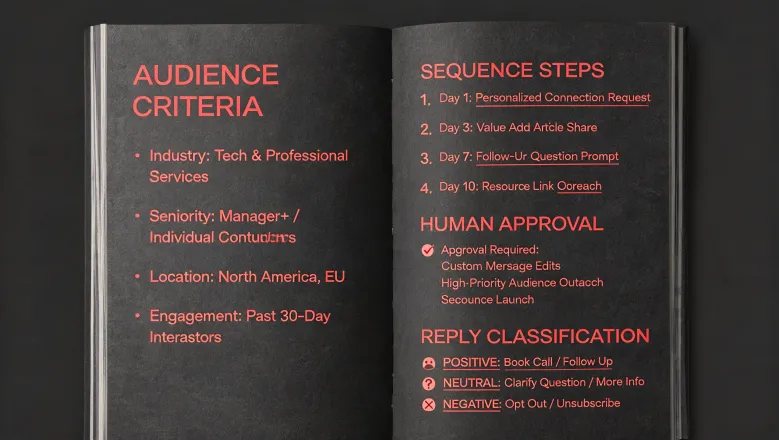
Yes, cold email is part of Expandi's stack. The platform includes email finder and verification, so you're not building a list of guessed addresses. You can create multichannel sequences: send a LinkedIn connection request, and if the person accepts, trigger a cold email follow-up. That's where Expandi gets interesting for B2B sales teams.
I used to run LinkedIn and email as separate tracks. That was inefficient. I'd pitch someone on LinkedIn, then a month later send a cold email that ignored the LinkedIn conversation. It looked sloppy. When I switched to one connected workflow, my follow-ups got simpler and response quality improved.
Here's the thing: cold email isn't just a deliverability game. It's a first impression. If your sequence reads like a mass blast, your brand reads like a mass market product. Expandi can help you personalize at scale, but the copy still has to sound human.
How does Expandi fit into account-based marketing (ABM)?
ABM (account-based marketing) means targeting specific accounts that fit your ICP instead of chasing random leads. Expandi fits because it lets you build an account list, enrich the right contacts at those accounts, and run outreach sequences that feel tailored to each account.
In practice, I used it for a 30-account ABM play in late 2025. We listed the target accounts, added multiple contacts per account via the Chrome extension, and set a sequence that mentioned the account's specific pain point in the first line. That's the difference between account-based marketing and account-based spraying.
To be fair, ABM is a strategy, not a product. Expandi is the execution layer. You still need a clear ICP, a message that maps to the account's business problem, and a CRM to track who engaged. If you send the same message to everyone at an account, don't blame the tool. Blame the strategy.
What is sales intelligence software, what features matter, and when should a B2B team use it?
Sales intelligence software collects and organizes data about accounts and contacts so sales teams can decide who to talk to next. Common features include firmographic company data, technographic data (what tools a company uses), intent signals (who is actively researching a category), email and phone data, verification, CRM integration, and automation rules.
When should a B2B team use it? When you have more potential accounts than manual research can handle. A good rule: if someone asks 'who should we target this quarter?' and the only answer is a guess, you need sales intelligence. If you have 50 prospects and a founder who knows them all personally, a lighter tool is probably enough.
According to LinkedIn Newsroom (news.linkedin.com, July 2023), LinkedIn has over one billion members. You are not going to manually sort through a billion profiles for every deal. That's why data tools exist. But they're not a substitute for judgment.
What mistake cost you the most money with prospecting tools?
The most expensive mistake happened in September 2022. I set up a multichannel automation tool with a dirty list of around 3,000 contacts. I assumed that because the emails were marked 'verified,' they were safe to send to. Didn't verify. Turned out a big chunk were invalid or spam traps. The result: a damaged domain reputation, a burned cold email sequence, and about $2,400 in wasted subscription and tooling costs. Awkward. Expensive.
People warned me about data hygiene before running campaigns. I didn't listen. Now I maintain a pre-campaign checklist for the whole team. In the past 18 months, that checklist has caught 47 potential errors, from duplicate contacts to missing SPF records. That's 47 mistakes that didn't reach a customer.
That's the thing I keep saying to other sales ops people: automation amplifies whatever you feed it. Garbage in, expensive garbage out. No tool can fix a dirty list. It can only send it faster.
What does agent-native prospecting mean, and why should I care?
Agent-native prospecting means the platform is built for AI agents to do parts of the workflow. Instead of a human manually sitting in front of LinkedIn for hours, software agents can build lists, enrich profiles, verify emails, and route follow-ups through the right channel. You set the guardrails and review the output; the agent does the repetitive work.
This is different from old-school automation, which was usually a bot doing one rigid action over and over. Agent-native workflows are more flexible. They can adapt based on fields in your CRM, reply patterns, and account changes.
I care because it saves my team from the parts of prospecting that burn people out. But here's the catch: you still need a human to define what 'good' looks like. An agent will happily send 1,000 mediocre messages. It won't know your brand's tone or which account deserves a thoughtful follow-up. That's still your job.

Julian Hartwell
Julian Hartwell is an independent B2B sales intelligence analyst covering contact databases, company data, decision-maker profiles, direct dials, prospect lists, and buying signals. He applies the ISO/IEC 25012 data-quality model while examining field accuracy, coverage, freshness, duplicate rate, match confidence, and source transparency. His evidence-led guides help revenue teams compare prospecting platforms, define acceptable data thresholds, and build account lists that support reliable territory planning and outreach.