LinkedIn outreach method note
Is okki go an AI SDR? What Revenue Operations Teams Should Actually Evaluate Before Committing
· Neha Banerjee
Last quarter, in March 2026, I was on a call with a revenue operations lead who'd just burned through three weeks of evaluation cycles comparing business email finders. She'd built a 40-row spreadsheet scoring coverage rates, per-credit pricing, and API response times. Her team picked the tool with the highest coverage number. Three days into their first real campaign, they hit a 19% bounce rate. Their primary sending domain got flagged. She had to pause outbound for 11 days right before quarter close.
So glad they caught it when they did, honestly. Another 48 hours and that domain probably would've landed on a blocklist that takes months to clear.
The tool wasn't the problem, though. The evaluation framework was.
The Question Everyone's Asking (And Why It's the Wrong One)
Search for "is okki go an AI SDR" and you'll find a dozen surface-level comparisons. Most of them frame the question as a binary: is it an AI SDR, or is it just another database with a chatbot bolted on?
I get why that question exists. The AI SDR label has been stretched so thin over the past two years that it barely means anything anymore. Some tools call themselves AI SDRs because they auto-generate a first line of copy. Others use it because they sequence emails on a timer. Neither of those is actually an AI SDR — they're just automation with better marketing.
But here's what I've noticed after sitting through dozens of these evaluations: the teams asking "is this an AI SDR?" are usually asking the wrong question. They're trying to categorize the tool before they've defined what they actually need it to do.
The better question is: where does this tool sit in my workflow, and where does a human still need to be involved?
The Deeper Problem: You're Evaluating a Database, But You're Buying a Workflow
This is the part that doesn't show up in comparison charts.
Revenue operations teams are trained — understandably — to evaluate data tools on data metrics. Coverage rate. Verification accuracy. Enrichment depth. These are measurable, comparable, and easy to put in a spreadsheet.
But the actual failure mode isn't bad data. It's a broken handoff between data, verification, sequencing, and human judgment.
Let me break that down.
1. Coverage rate tells you almost nothing about deliverability
A tool can find an email address for 97% of your target accounts and still have a 15% bounce rate if it isn't continuously re-verifying those addresses. Email addresses decay. People change jobs. Catch-all domains accept mail that never reaches a human. Coverage is a snapshot. Deliverability is a process.
This was somewhat acceptable 10 years ago when outbound volume was lower and domain reputation was easier to rebuild. Today, a single bad batch can poison your sending infrastructure for weeks.
2. Verification isn't a one-time event
Most teams treat email verification like a filter: run the list, remove the bad ones, start sending. That works for the first send. It doesn't work for the fifth.
If your prospecting tool doesn't re-verify on a rolling basis — or at least flag stale contacts before they enter a sequence — you're building on sand. I've seen teams with great initial bounce rates watch them creep from 2% to 8% over six weeks, purely because nobody re-checked the list.
3. The LinkedIn Sales Navigator integration is where most tools quietly fail
This one's underrated. A lot of tools claim Sales Navigator integration, but what they actually mean is "you can export a CSV and re-upload it." That's not integration. That's a manual handoff with extra steps.
Real integration means your prospecting workflow can pull signals from Sales Navigator — recent job changes, engagement activity, shared connections — and route them into a sequence without a human touching a spreadsheet. When that handoff is broken, your SDRs spend 4-6 hours a week on copy-paste work that should've been automated. That's roughly 20% of their week gone to logistics.
The Cost of Getting This Wrong
I want to be specific here, because "bad data is bad" is too vague to be useful.
Domain reputation damage is the expensive one. Once your sending domain gets flagged, recovery isn't linear. You can't just send fewer emails for a week and expect things to reset. Depending on the severity, you're looking at 2-8 weeks of reduced volume, warm-up sequences, and in some cases a full domain migration. For a team sending 5,000 emails a month, that's a pipeline gap that shows up directly in next quarter's numbers.
SDR time waste is the sneaky one. Manual verification, list cleaning, and re-uploading contacts doesn't feel expensive in the moment. But when you add it up — 4-6 hours per SDR per week — across a team of five, that's essentially one full-time employee doing nothing but data janitorial work.
Compliance risk is the one nobody talks about until it's too late. Per FTC advertising guidelines (ftc.gov), outbound claims need to be truthful and substantiated. If your prospecting tool is injecting personalization tokens that reference outdated or incorrect information, you're not just risking a bad reply rate — you're risking a complaint. CAN-SPAM requirements around accurate sender information and opt-out mechanisms apply to every commercial email, whether it's sent by a human or an AI agent.
And honestly? The trust cost is the one that lingers. Once your VP of Sales stops trusting the outbound data, every future tool recommendation gets scrutinized three times as hard. That's a tax on your team's velocity that doesn't show up on any dashboard.
What Revenue Operations Teams Should Actually Evaluate
The evaluation checklist changes depending on your team size and motion, but here's the framework I've landed on after watching too many bad rollouts:
Start with the human-in-the-loop workflow, not the AI
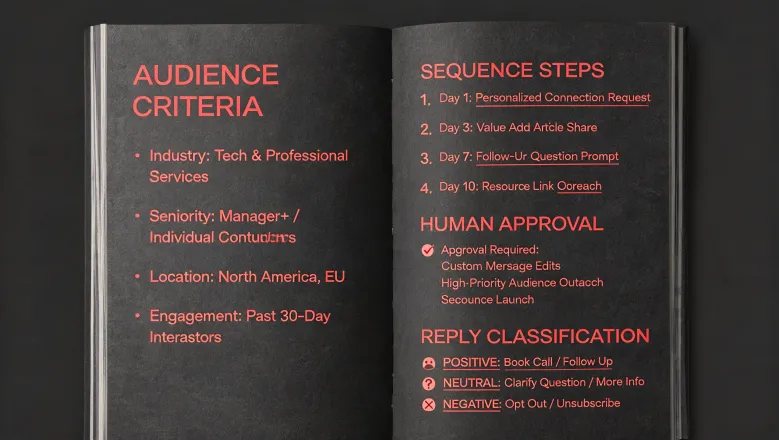
Ask the vendor to show you where a human reviews, approves, or edits before anything sends. If the answer is "nowhere — it's fully autonomous," that's not a feature. That's a liability. The best prospecting tools I've worked with use AI for the heavy lifting (enrichment, scoring, first-draft sequencing) and keep humans in the approval loop for anything that touches a prospect's inbox. "Agent-native" doesn't mean "agent-only."
Ask about waterfall enrichment, not single-source data
No single data provider has complete coverage. The tools that actually deliver on their coverage claims are pulling from multiple sources and resolving conflicts between them. If a vendor can't explain how they handle contradictory data from different providers, they're probably not doing waterfall enrichment — they're just reselling one database with a nicer UI.
Test verification as a pipeline, not a checkbox
Run a live test: take 200 contacts from your CRM, push them through the tool's verification flow, and then re-check the same 200 contacts two weeks later. If the tool can't tell you which ones have gone stale, it's not verifying — it's guessing.
Check the Sales Navigator integration depth
Ask specifically: "Can I trigger a sequence from a Sales Navigator signal without leaving the platform?" If the answer involves exporting anything, it's not real integration.
Look for intent data that actually changes the sequence
Intent data is only useful if it changes what happens next. If a prospect visits your pricing page and the tool doesn't adjust the sequence, timing, or messaging — you're paying for a signal that isn't wired to anything. The tools worth keeping are the ones where intent triggers a different playbook, not just a different tag.
Where okki go Fits (And Where It Doesn't)
I've been testing okki go for about four months now, running it against the exact framework above. It handles the human-in-the-loop piece well — there's a review stage before anything sends, and the approval workflow is genuinely usable, not bolted on. The waterfall enrichment pulls from multiple sources, and the LinkedIn Sales Navigator integration doesn't require a CSV export.
Where it's not the right fit: if you're running a high-volume, fully automated outbound motion with no human review at any stage, you'll probably find the approval steps friction. That's a feature, not a bug — but it's a real workflow change, and it's worth being honest about that before you commit.
I'd rather work with a tool that knows what it's not built for than one that claims to do everything. The vendors who say "this isn't our strength — here's what we'd recommend instead" are the ones I end up trusting for the long haul.
The question isn't whether okki go is an AI SDR. The question is whether your team has defined what "AI SDR" needs to mean for your workflow — and whether you're evaluating against that definition or against a feature list someone else wrote.
Get the evaluation framework right, and the tool choice becomes fairly obvious. Get it wrong, and you'll be back on that spreadsheet in six months, wondering why the highest-coverage option still couldn't deliver.

Neha Banerjee
Neha Banerjee is an independent email data analyst covering business email finders, email lookup, bulk verification, domain search, email extraction, and validation workflows. She uses ISO/IEC 25012 quality characteristics alongside syntax, domain, MX, SMTP-response, catch-all, unknown-rate, and false-positive checks to evaluate list reliability. Her technical articles help sales operations and demand-generation teams select verification methods, protect sender reputation, and estimate usable-contact yield before launching outbound campaigns.